


US NFP beat expectations in August, but markets remain focused on CPI. See what the jobs report, Fed policy and Treasury yields could mean for gold.
September opened with two hawkish signals for markets.
First came Fed Chair Kevin Warsh’s Jackson Hole speech. In his Jackson Hole address, Warsh stressed that inflation remains above the Fed’s 2% target and argued that forward guidance should play a more limited role, leaving markets with less certainty about the future rate path.
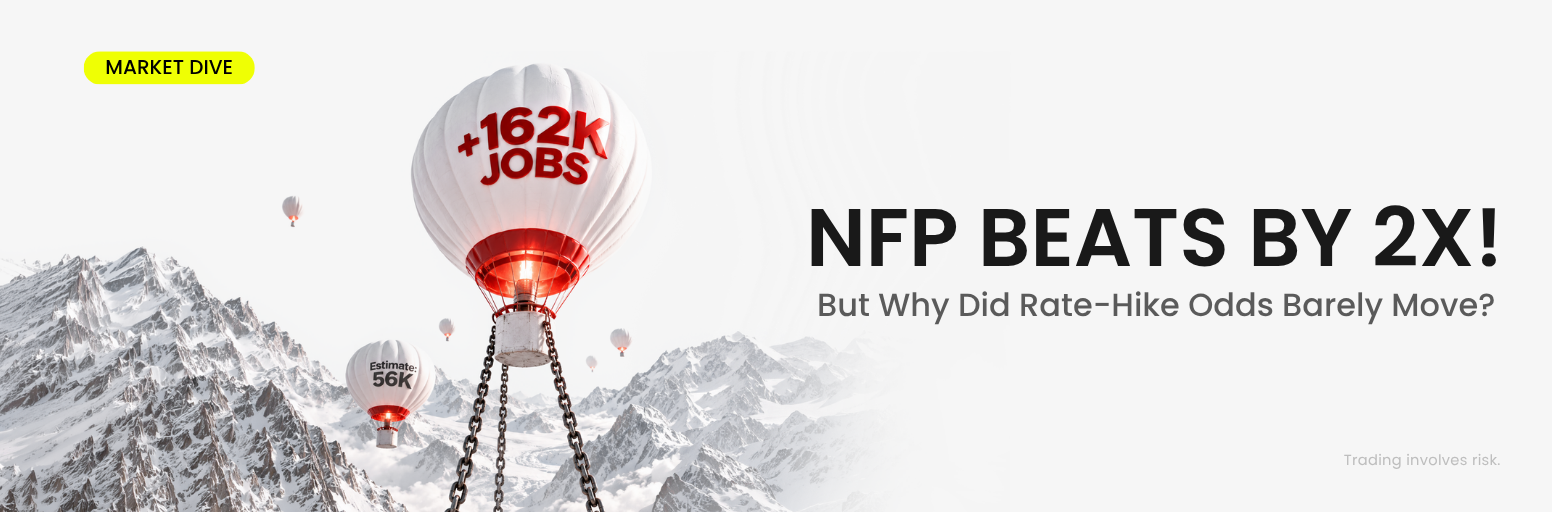
Then came a much stronger-than-expected US jobs report.
According to the US Bureau of Labor Statistics’ August Employment Situation report, nonfarm payrolls increased by 162,000, while June and July were revised higher by a combined 55,000 jobs.
Yet markets did not suddenly price in an overwhelming probability of a September rate hike.
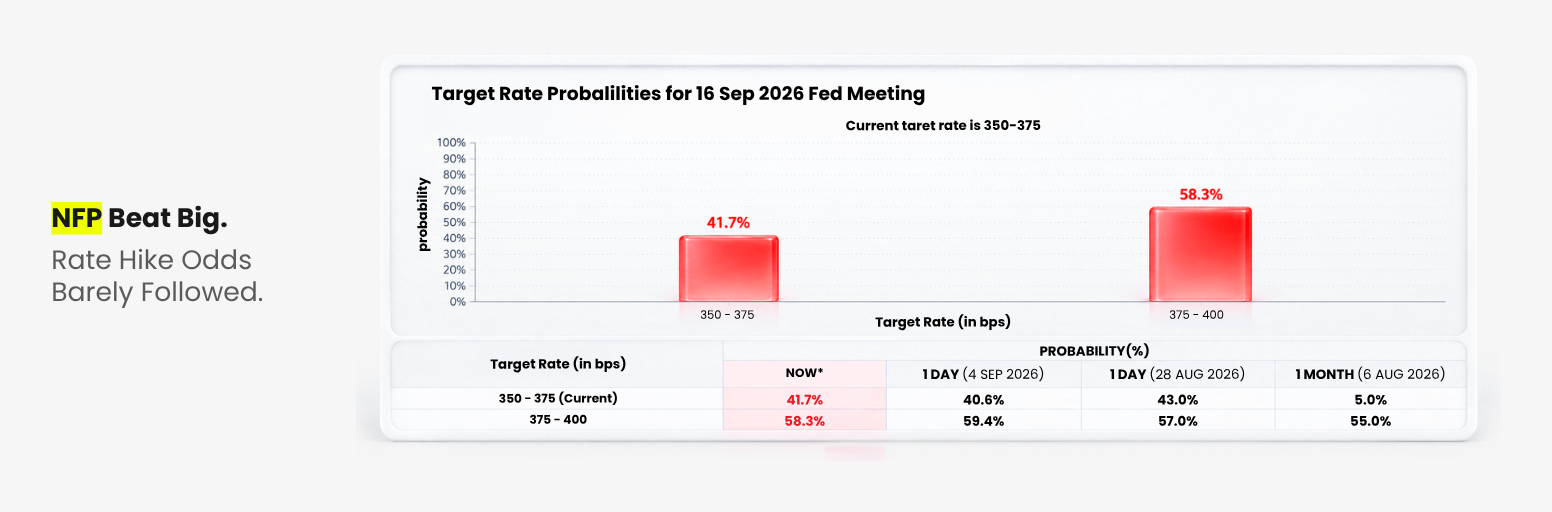
Following the payroll report, CME FedWatch pricing put the probability of a 25-basis-point September hike at around 58%. That remained below the roughly 63% peak reached following Jackson Hole.
So why wasn’t a payroll beat of this size enough to settle the Fed debate?
The answer is that the jobs report was strong, but not strong enough to change what now matters most for monetary policy.
Employment looks stable. Inflation is the bigger question.
And that distinction could determine what happens next for Treasury yields, the US dollar and gold.
Strong NFP, But Not a Labor-Market Breakout
There is no question that the August employment report was better than expected.
BLS data showed payrolls increasing by 162,000, while the unemployment rate remained unchanged at 4.1% and the labor force participation rate rose from 61.4% to 61.6%.
June payrolls were revised from +20,000 to +31,000, while July was revised from a 23,000 loss to a 21,000 gain.
Those revisions significantly reduce the risk that the US labor market was entering a sharp downturn.
But beneath the headline number, the picture is more balanced.
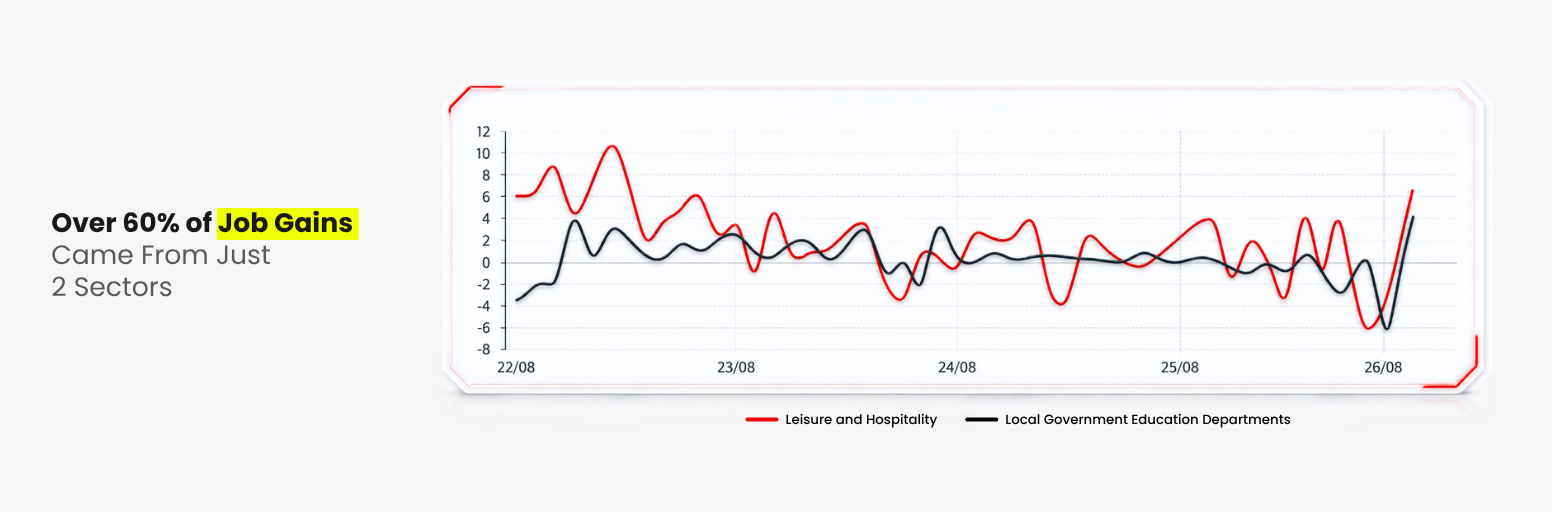
Of the 162,000 new jobs, 59,000 came from food services and drinking places, far above the sector’s average monthly gain of 12,000 over the previous year. Another 42,000 came from local government education, largely reversing a decline in the previous month.
Together, those two categories accounted for more than 60% of August’s payroll gain.
Other sectors were less dramatic. Manufacturing added 16,000 jobs, construction rose by 22,000 and healthcare continued to expand, while information employment declined by 23,000.
Wage growth also remained contained.
Average hourly earnings rose 0.3% month over month and 3.1% year over year.
That matters because a strong employment report becomes much more concerning for the Fed when it is accompanied by accelerating wage pressure.
August did not show that.
The report therefore changes the labor-market story, but not completely.
It removes much of the downside risk created by the weak July reading. What it does not prove is that employment has entered a new period of rapid acceleration.
The US labor market looks resilient.
It does not yet look overheated.
Why Didn’t NFP Settle the Fed Debate?
The rest of the economy explains why markets remain cautious.
August activity data continue to show a clear divergence between manufacturing and services.
According to the Institute for Supply Management’s August data, the Manufacturing PMI fell from 55.6 in July to 54.6 in August. New orders declined from 56.7 to 53.7, while production edged lower from 58.5 to 58.3.
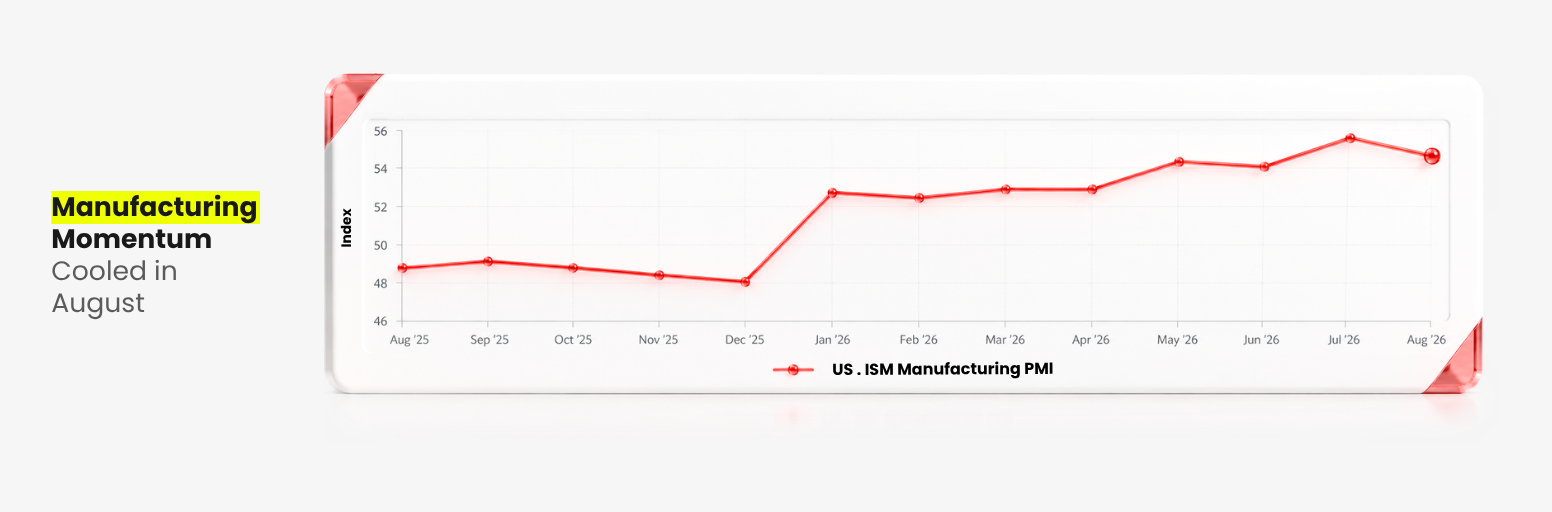
Importantly, however, the manufacturing prices index remained high at 71.1, showing that softer momentum has not necessarily translated into softer price pressures.
Services told almost the opposite story.
The ISM Services PMI rose from 54.1 to 55.4, with business activity and new orders accelerating. But the employment index remained in contraction territory at 47.8, while the prices index climbed further to 72.6.
In other words, the economy is not sending one clean signal.
Parts of activity remain strong, while employment indicators are uneven and price pressures remain elevated.
Household spending has also lost some momentum.
BEA data showed real personal consumption expenditures were essentially flat in July after rising 0.4% in June, while US Census Bureau data showed retail sales falling 0.6% month over month.
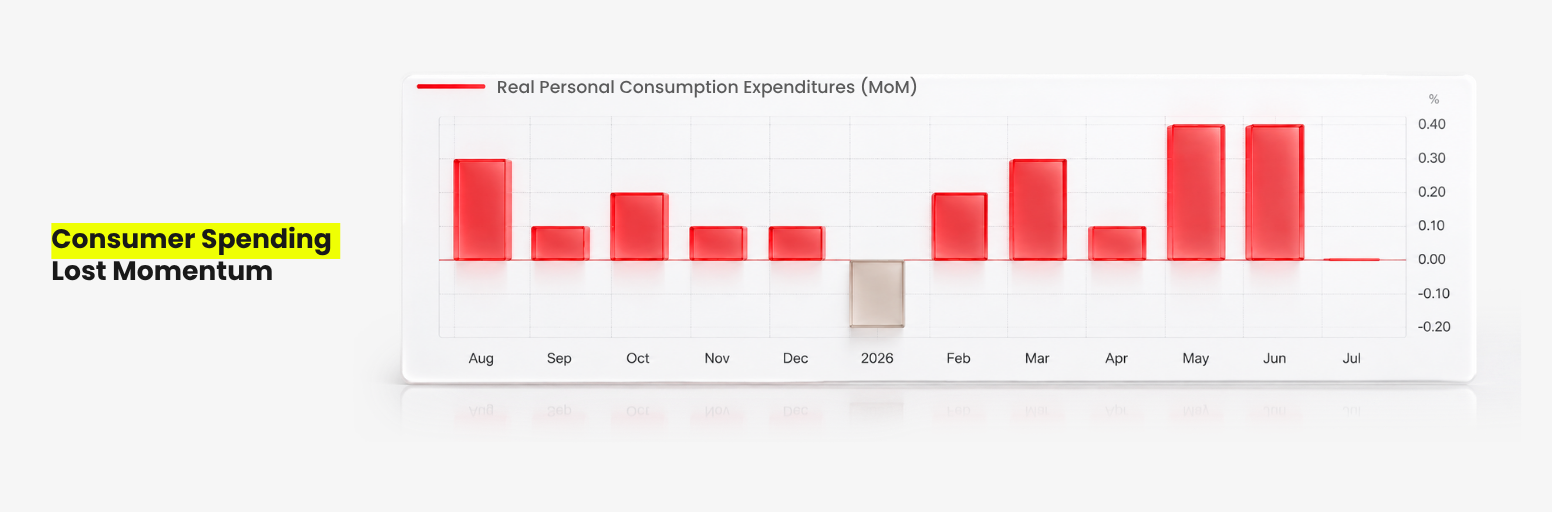
This is why the August jobs report alone was never likely to determine September policy.
Fed Governor Christopher Waller made that unusually clear just one day before the payroll release.
In his September 3 economic outlook speech, Waller described the labor market as stable and said his September policy decision would be heavily influenced by August inflation.
Continued disinflation could support leaving rates unchanged. A hotter inflation reading, on the other hand, could justify another hike.
That may be the clearest explanation for the market’s reaction.
The payroll report strengthened the case that the economy can withstand tighter policy.
But it did not establish that tighter policy is necessary.
August CPI may do that.
According to the official BLS release calendar, August CPI is scheduled for September 11, just days before the Fed meets.
Treasury Yields Are Already Tightening Financial Conditions
There is another factor the Fed has to consider: bond yields.
Long-term Treasury yields have continued climbing. Official US Treasury data show the 10-year yield reaching around 4.8% in early September, near its highest levels of the year.
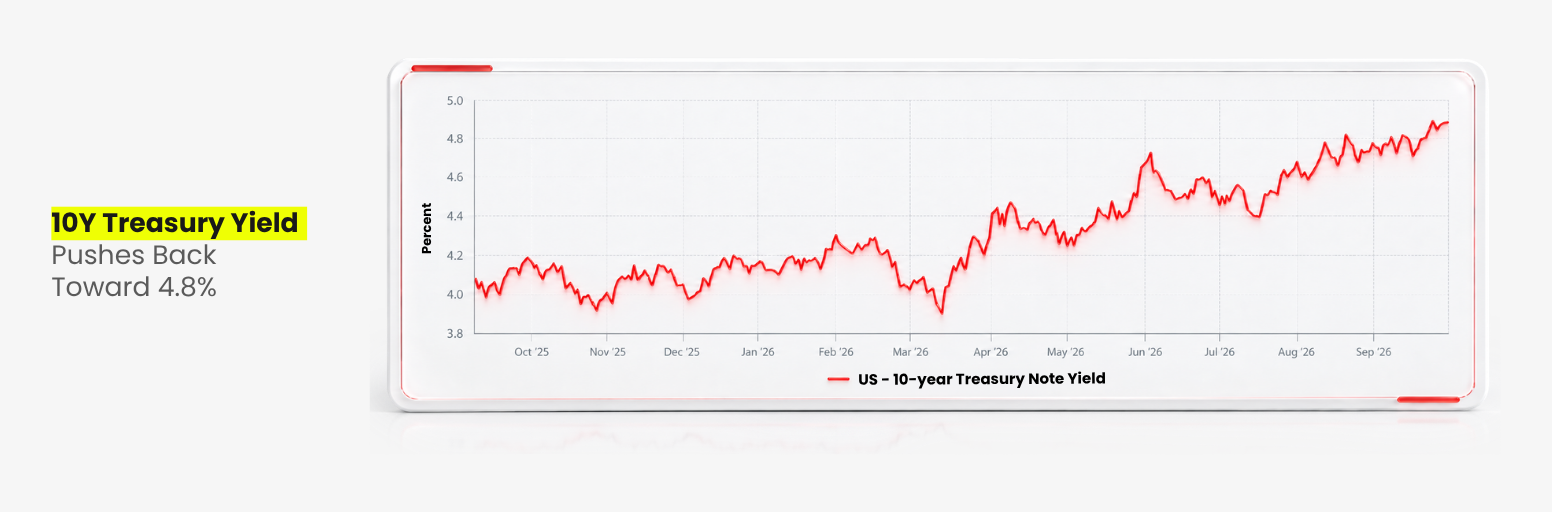
D Prime discussed this in our previous analysis on US Treasury yields.
Part of the rise reflects changing Fed expectations, but longer-term yields are also being supported by inflation uncertainty, fiscal concerns, Treasury supply and a higher term premium.
The result is that financial conditions are tightening even without another Fed hike.
Higher Treasury yields feed through into mortgage rates, corporate borrowing costs and the discount rates used to value financial assets.
That does not mean the Fed cannot raise rates again.
But it does mean the central bank must consider how much tightening is already taking place through financial markets before deciding how aggressively policy itself needs to move.
This is another reason one strong NFP report was unlikely to trigger a dramatic repricing on its own.
What Does This Mean for Gold?
For gold, the current environment creates unusually strong forces in both directions.
On one side are higher Treasury yields and rising expectations for tighter Fed policy.
Gold does not generate interest income. When yields rise, the opportunity cost of holding gold increases, which can put pressure on prices.
Recent World Gold Council market data show gold remaining volatile as markets weigh higher rate expectations against persistent safe-haven demand.
But there is also a strong support story.
Fiscal concerns remain elevated, geopolitical uncertainty continues and central banks are still accumulating gold.
According to the World Gold Council’s latest central bank statistics, central banks reported 23 tonnes of net gold purchases in July, bringing reported year-to-date purchases to around 130 tonnes.
That demand is important because central banks typically hold gold as a reserve and diversification asset rather than for short-term trading returns.
Geopolitical tensions are adding another layer of complexity.
Oil markets have remained highly sensitive to disruptions around the Strait of Hormuz. The US Energy Information Administration has highlighted how disruptions to Middle East oil flows have driven significant volatility in Brent crude prices.
Higher oil prices can hurt gold by raising inflation expectations and keeping Treasury yields elevated.
But geopolitical escalation can simultaneously strengthen safe-haven demand.
That leaves gold caught between two competing forces:
higher yields limiting the upside, while geopolitical, fiscal and reserve-diversification demand provide support underneath.
Until markets receive a clearer signal on inflation and monetary policy, D Prime expects that tension to keep precious metals volatile rather than produce a clean directional trend.
What Should Traders Watch Next?
The next several days contain multiple catalysts capable of breaking that balance.
Watch US inflation. The BLS September release schedule shows August PPI arriving on September 10, followed by CPI on September 11. A hotter reading would strengthen the case for another Fed hike and could push Treasury yields higher. A softer report would give the Fed more room to hold.
Watch oil and geopolitical risk. Further disruption around major Middle East energy routes could renew inflation concerns while simultaneously increasing demand for safe-haven assets.
Watch the Fed decision. The Federal Reserve’s official FOMC calendar confirms its next policy meeting will take place on September 15–16.
For gold traders, the direction of yields around these events may matter just as much as the headline data itself.
If inflation surprises higher and Treasury yields extend their rise, gold could face renewed pressure.
If inflation cools enough to reduce hike expectations while fiscal and geopolitical risks remain elevated, the balance could shift back in gold’s favour.
For now, the August payroll report has answered one important question.
The US labor market is not deteriorating as sharply as July’s initial numbers suggested.
But it has not answered the question that matters most for the Fed.
Is inflation cooling fast enough to justify staying on hold?
That makes August CPI the more important test.
Until the market gets that answer, Treasury yields, Fed expectations and gold are likely to remain highly sensitive to every new piece of data.
By D Prime Analysis Team
Macro and market strategy research by D Prime’s in-house analysis team.
Disclaimer
The information contained herein is provided for general informational and educational purposes only and does not constitute investment advice, financial advice, trading advice or any other form of professional advice, a recommendation, or an offer or solicitation to buy or sell any financial instruments or engage in any trading strategy.
Trading in leveraged products such as contracts for difference (CFDs) involves a significant risk of loss and may not be suitable for all investors. Past performance is not indicative of future results. Any references to market trends, asset performance, price levels, or forward-looking statements reflect opinions or general market commentary as at the date of publication and are subject to change without notice.
This article does not take into account any individual investor’s objectives, financial situation, or risk tolerance. Readers should conduct their own independent research and seek professional advice before making any investment or trading decisions. D Prime and its affiliates make no representations or warranties about the accuracy or completeness or reliability of this information and disclaim any and all liability for any direct, indirect, incidental, consequential, or other losses or damages arising out of or in connection with the use of or reliance on any information contained herein. The above information should not be used or considered as the basis for any trading decisions or as an invitation to engage in any transaction. Do not rely on this article to replace your independent judgment.
“D Prime” is a brand name of D Prime Vanuatu Limited, a company incorporated and regulated by the Vanuatu Financial Services Commission (Company Number: 700238). The availability of products and services may vary depending on jurisdiction and applicable regulatory requirements.